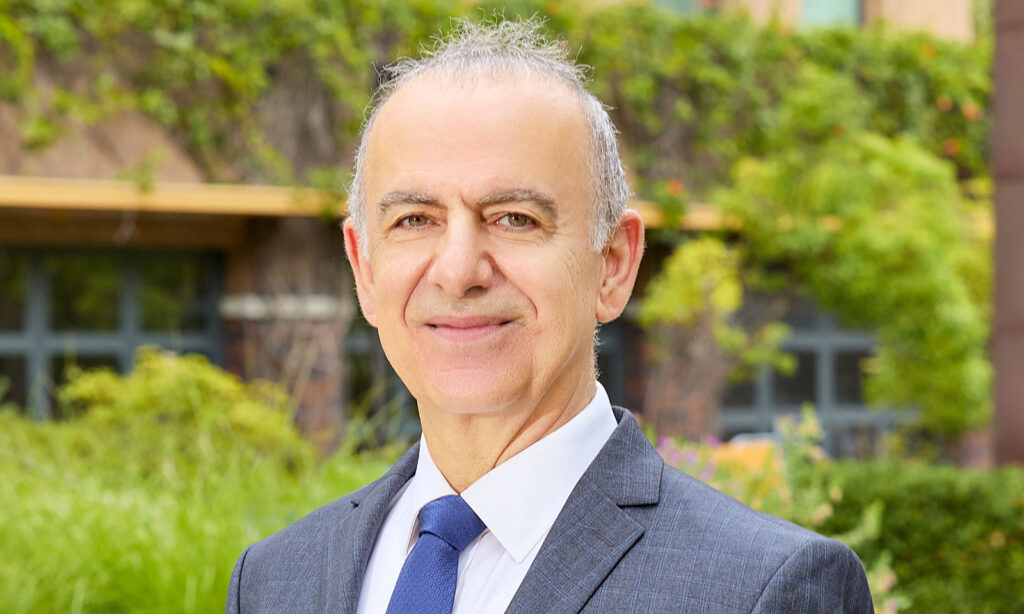
Kyriacos A. Athanasiou sometimes struggled to not fall asleep while sitting in class during early-morning rounds at the University of Texas Health Science Center in San Antonio.
Then came a case that jolted him awake.
A young motorcycle accident victim had died, despite treatable injuries. He had gone into shock on the way to the hospital, resulting in collapsed veins in his arms and legs.
Paramedics couldn’t save him because those blocked veins wouldn’t have yielded to the standard practice of trying to deliver fluids or blood products intravenously.
“How else could you deliver a drug so it would still reach the heart and vital organs?” thought Athanasiou, then a young assistant professor. Bone marrow seemed like a good first place to try.
That curiosity led to an invention that is now used by emergency medical teams in ambulances and hospitals throughout the world: an intraosseous infusion device, equipped with a hollow-bore needle that delivers vital liquids into bones.
The EZ-10 device has been featured on a dozen TV shows, including “ER” and “Gray’s Anatomy.” Athanasiou believes it has saved millions of lives. And he was just getting started.
Engineering relief
Roughly 30 years after his revelation, Athanasiou today is a distinguished professor of biomedical engineering at UC Irvine. He has launched six biomedical startups and guided 15 products through FDA approvals. In April, he was elected to the American Academy of Arts & Sciences. That goes along with elections to the National Academy of Inventors in 2014, the National Academy of Medicine in 2020 and induction in 2025 into the National Academy of Engineering for “contributions to the understanding and treatment of musculoskeletal afflictions and for leadership in bioengineering.”
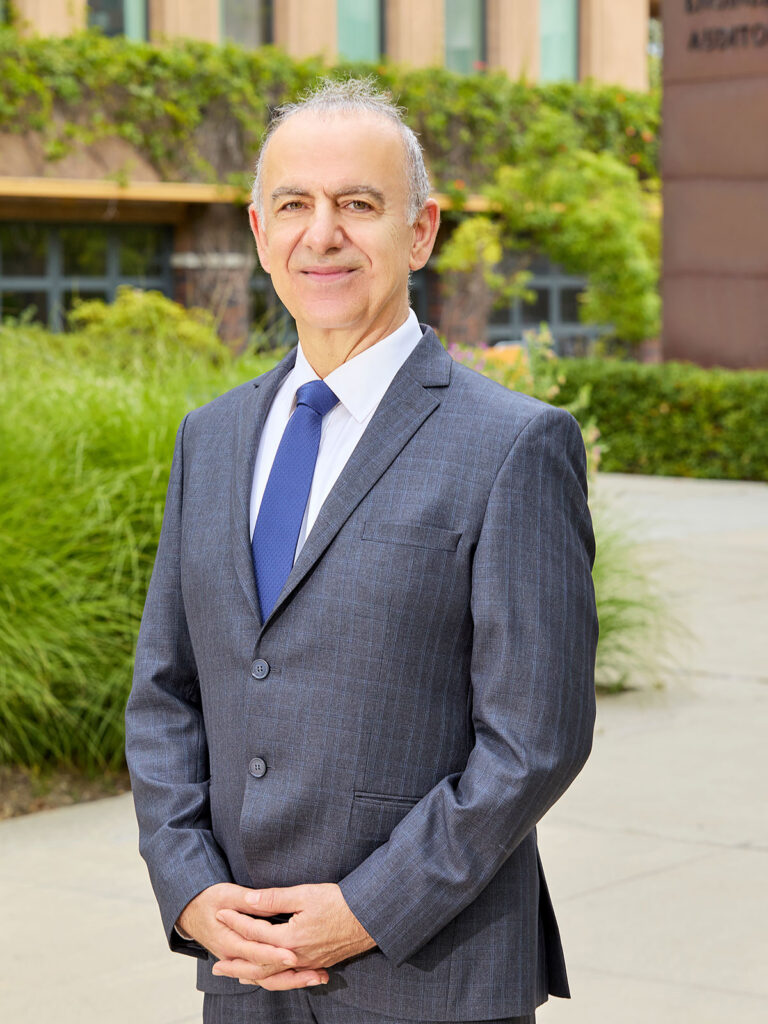
“He’s a true role model,” says his friend and collaborator, UCI biologist Maksim Plikus, who added that he particularly admires Athanasiou’s ability to “effortlessly abstract from the details and see the bigger picture and the translational potential of what can at first seem like a very basic discovery.”
Athanasiou says a major reason he made UC Irvine his home is the school’s unusual support for translational research – helping scientists whose discoveries have real-world impact.
“It’s very pro-development and startups,” he says. “It also has an impressive ecosystem. It’s actually one of the best, if not the best, that I’ve seen anywhere.”
He specifically praised Beall Applied Innovation, a UCI hub housed in a 31,000-square-foot University Research Park facility that helps speed the commercialization of university research. “Under that one roof, we have incubators. We have labs specifically for translation. We have startups that get incubated there,” he says. “We have angel investors, venture capital groups, all situated under one umbrella.”
New cartilage vs. chronic pain
Athanasiou’s current goal promises potentially enormous rewards, not only financially but in providing better quality of life to one-quarter of the world’s population who suffer from cartilage maladies. He is developing an engineered cartilage to replace damaged tissues in the body, such as the joints, nose and spine. The approach uses patented methods to make cartilage from “progenitor cells” that grow in rib cartilage. Such cells are similar to stem cells but are more differentiated: already primed to become cartilage-forming cells.
While the engineered cartilage could help millions who suffer from bad knees and hips, Athanasiou is particularly motivated by the potential to address disorders of the temporomandibular joint, in the jaw. That’s because of the intense suffering they cause and the lack of effective solutions for a patient population that is 90% young women.
“If we can bring this to clinical use,” he says, “I’ll be able to reach my life’s end and look back and say we’ve done something good to help the human condition. We have really contributed positively to society.”
ELITE CIRCLES
Kyriacos A. Athanasiou and these five UCI professors were elected to the American Academy of Arts & Sciences this spring.
Jacquelynne Eccles: Distinguished professor of education
George Marcus: Distinguished professor of anthropology
David Snow: Professor emeritus of sociology
Etel Solingen: Distinguished professor of political science
James Weatherall: Chancellor’s professor of logic and philosophy of science